
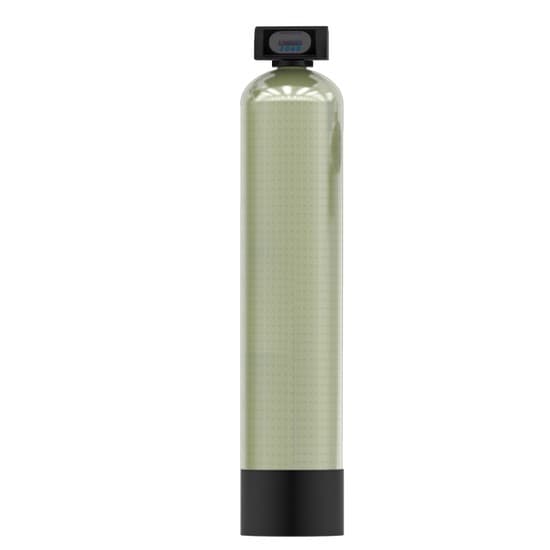
Automatic sand filter AquaLong Sand 2-3
€639
The AquaLong Sand sand filter is used to remove mechanical impurities with a porosity of up to 20-40 microns
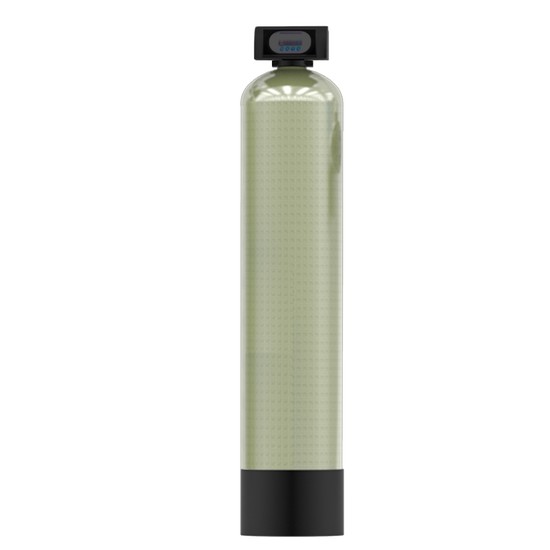
The AquaLong Sand 2-3 sand filter is used to remove mechanical impurities with a porosity of up to 20-40 microns.
Use
The sand filter is used as a stand-alone filter or as a pre-filtration before other filters (softener, multifilter, nitrate removal filter, carbon filter) in apartments, family houses, small, medium and large enterprises.
By removing mechanical impurities:
- extend the life of other filters,
- extend the life of your washing machine, dishwasher or boiler,
- You can use rainwater for technical purposes.
How to choose the right sand filter
Sand filters are distinguished by the flow rate (and volume of the filter media). To find out what type of filter you need, you need to make the following calculation:
- Count the maximum number of people who can turn on the water at the same time. Here you must take into account all taps, showers, bathrooms and toilets and people who live with you or can visit you. The flow rate from 1 tap is 7 l/min or 7 x 60 min = 420 l/h or 0.42 m3/h.
- Multiply the number of taps (people) by the flow rate of one tap.
- Choose a nitrate filter whose flow rate is higher than the value you obtain.
For example:
- Let's say your family consists of 4 people, plus guests can come, and the maximum number of taps open at the same time is 6.
- Multiply the number of taps (people) by the flow rate of one tap: 6 x 0.42 = 2.52 m3/h.
- The flow rate of your filter should therefore be higher than 2.52 m3/h.
Design and principle of operation

- Filter housing (filter column). The filter housing is made seamless from food-grade glass fibre. This ensures maximum strength and corrosion resistance. The bushing is a hollow cylinder with a spherical top and bottom. The case is fixed to the base. In the upper part, there is a neck for filling and unloading fillers (gravel and ion exchange resin). The socket has an internal thread for mounting a control valve.
- Runxin control valve with time-based regeneration. It is adjusted once when installing the filter.
- Drainage and distribution system. It consists of a vertical tube and other elements that prevent the filter media from washing out of the housing during filter operation. The control valve with the upper cap attached is screwed into the housing, which slides it onto the tube.
- The filter media is a Filter-Ag filter material, which is based on porous volcanic glass (pumice, which is rough, consists of glass fibers and corks, between which there are cavities. These cavities cause the pumice stone, despite its relative density ρ = 2.37, to float on water). It allows a high degree of filtration and an effective "fight" with suspended particles with a size of 20-40 μm. It prevents the "sintering" of the retained sediment at the top of the charge layer.
- Base layer of gravel on which the filter media is laid. The total volume of the filling is about 2/3 of the volume of the case. The free space above the media is necessary in terms of the expansion of the filter media during backwashing.
Technical information
| Pressure tank: | 12" x 52" |
| Maximum water flow, m3/h: | 1,11 |
| Quartz sand (3-5 mm), kg: | 13 |
| Filter media Ag (USA), litre: | 51 |
| Control unit: | Runxin F71P1 |
| Connection: | 3/4" |
How to find out the dimensions of the filter:
Look at the dimensions of the tank (1" = 2.54 cm) and add 12 cm to the control unit.
Automatic sand filters AquaLong Sand differ only in dimensions. The principle of operation is the same.